Will AI take our jobs?
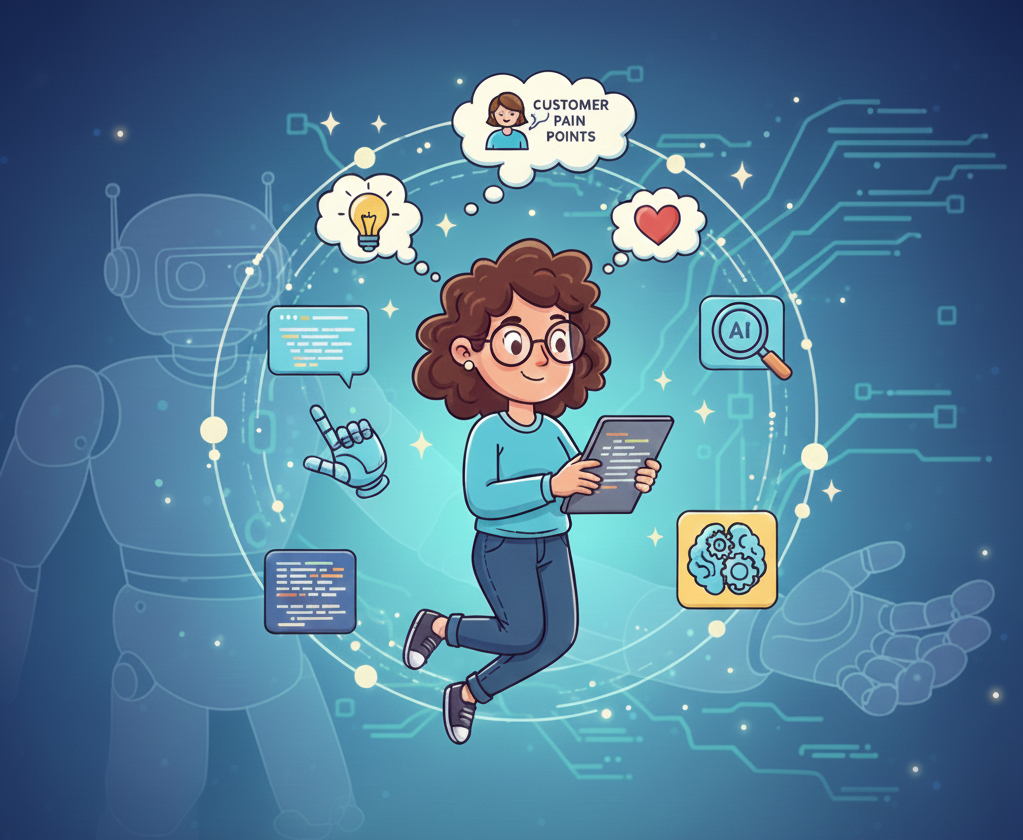
It's impossible to work in tech these days and not, in some way, come across a statement or sentiment that AI is going to replace us all. With the various social media algorithms doing their thing (and yes, I do include LinkedIn in that), it's probably fair to say that we've all been exposed to content that tells us our specific slice of tech - be it software engineers, security analysts, designers, etc. - is doomed, and we're already at the end of our respective careers.
We've seen it before
The mentality pushed by these "AI experts", "AI influencers", and "AI founders" is already getting old. We've heard this sort of thing in one form or another for a long time.
When blockchain hit the mainstream, the era of centralised anything was done, remember that? But look where we are today; yes, there are various decentralised offerings and alternatives, and it's done great things for products with strong audit and transparency requirements. It has its place, but the entire world doesn't run on the blockchain, like all of these "experts", "influencers", and "founders" were saying back then.
Why are these statements everywhere then? Well, suppose someone's got "AI founder" in their LinkedIn bio. In that case, they need to make as much noise as possible about how their super unique company is solving that annoying problem of companies having to pay people a salary. Of course, they're making a lot of noise; for them, it's marketing...regardless of how annoying it is for the rest of us.
Some people simply see it as an opportunity to stand out or be seen. Jump on the latest bandwagon, and maybe the keywords will drive more people to your content and increase your follower count. Others likely just want to be a part of it all, but some certainly fall into the adage enough knowledge to be dangerous.
There are, of course, genuine experts out there, people who have studied and worked in AI for years, if not decades. Sadly, though, they're often the quietest voices. Not necessarily because they aren't speaking, but what they're saying isn't enough of a "hot take". Or, based on how modern content-based platforms work, it's not controversial enough to drum up views, clickthroughs, reposts, or whatever other metrics measure how "good" a post is.
Imitation is not innovation
Don't get me wrong, I use AI daily in my job, because it's a fantastic enabler. It's a useful rubber duck, it's good at boilerplate, and it's good at writing pre-defined tests (no, I don't let it decide what tests to write). It can be a powerful refactoring tool when correctly constrained: en masse renaming, updating call sites to match a modified function signature, even conforming to breaking API changes incurred from a library upgrade. But do I let it write feature code or performance-critical code for production? Absolutely not.
The AI models that we use today are only as good as the data they're trained on. What that ultimately means is that they're great at solving known problems. Especially when those problems have appeared a few thousand times on Stack Overflow or in open-source repositories.
In my experience of working with AI though, I've never seen it innovate or been able to make it. If I give it a sorting problem, it solves it with a known sorting algorithm; it's the same if I give it a graph problem. In some tests, I've asked it to refactor code to make it more scalable, which it mostly does an OK job of, but it spits out exactly what I'd expect were I to give the task to a competent human engineer. Which is fine and saves some time, but it's not innovation.
The way I see it, AI does such a good impression of being a person you can talk to, that a lot of people start to think it is a person, just faster. But it's not! I don't believe that AI is going to make the next technological breakthrough on its own, because I haven't seen a single instance of AI coming up with its own solution to anything.
So this future where engineers become irrelevant is complete nonsense. Engineers are some of the most innovative people in any company. While we may not be pitching the next great feature that catapults the company into a billion-dollar valuation, we are solving technical problems in innovative ways every single day.
Some will say that most of what an engineering team does is solve existing problems. To a point, that's true, but every product and platform is different. Each one comes with its own preferred practices, styles, historic architectural decisions, and constraints. Meaning that, while that CRUD request to a REST API isn't some highly unique and original concept, the way the system handles it is unique to that system.
AI can solve a known quantity easily, and we can often break down our system's problems and requirements into smaller quantities that are known. But the next great leap forward comes from people. It comes from product managers, who know their product inside out, what their customers' biggest challenges are, and spend months putting all the pieces together to form a big picture, long-term solution. It comes from engineers who get so frustrated with an existing approach or tool that one day they decide to make their own version that's so good they spin it off into their own startup.
AI simply doesn't think the same way that we do, it doesn't get frustrated, it doesn't understand customer pain, and it doesn't feel the passion of driven, highly-motivated colleagues that inspires others. I can't count the number of times I've bumped into a member of my team in the kitchen, and we've removed a massive roadblock by simply chatting about it while making a cup of tea. AI never goes back to its desk, having brainstormed a completely different approach by stepping back and reassessing the criteria rather than simply settling on the most agreeable, but still suboptimal, solution.
It's more than writing code
The issue with all these "engineering is dead" statements is the complete failure to understand that engineering is about much more than writing code. If it were, then AI would probably be more likely to replace us sooner rather than later.
Good engineers understand that code is just the tip of the iceberg. Architecture is one of the most valuable skills an engineer can have. Architecture, in my view, is one of the biggest distinguishing factors between a great engineer and a code slinger.
I haven't seen AI be able to architect complex systems. It will spit out architectures similar to those of existing systems, no problem. But that's mostly because they're documented in some form on engineering blogs, or people have had their own crack at the architecture diagrams of how they'd build existing products.
What about a new system? A system that's hit a scaling problem that isn't publicly documented or is unique to that system? No such luck, although, as usual, it will try and give an answer, and that answer will sound highly authoritative. In reality, you've got at best, an architecture with a bit pulled from maybe how Slack works, and a bit from maybe how Netflix works. And it might work just fine, but it's not tailored to the intricacies of your system, and software isn't a one-size-fits-all game.
The bottom line is that engineers are vital to the success of any system. While engineers at Google, Anthropic, OpenAI, and the rest use AI to support their development, AI isn't going to make the next great advance. We couldn't leave AI to its own devices and expect that it would automatically manage the roadmap and development cycles required to realise AGI. Let alone perform the scientific research required.
Anyone who still thinks engineering is done, answer this: why did Anthropic acquire Bun and immediately start hiring more engineers? Answer: because even the AI companies know they need engineers to build good software.
Conclusions
So, will AI take our jobs? I don't think so. In my view, if you use AI as a crutch, or you genuinely found a way to automate your entire job using AI, then you probably will be replaced - you've literally done it to yourself.
However, if you understand that engineering is more than writing code, and you push and develop yourself in the areas that aren't just code and syntax, then you're making yourself far more valuable. Even in a world where AI writes 100% of code, it still needs people guiding, instructing, and reviewing what it's doing. So, even if we never got to write code again, engineers would still be required for building software.
Another way to look at it is craftsmanship. I know that many engineers consider it a craft, and I count myself as one of them. Craftsmanship doesn't vanish just because something else comes along. Modern production techniques and materials revolutionised car production, but we still have companies like Morgan hand-building their cars with wooden frames.
There may come a time when AI really is ready to replace engineers; who knows what the intersection of quantum computing and AI might bring. But I don't think it's coming any time soon, and even if it does arrive one day, good engineers will still be needed. Some CEOs and executives seem to be desperate for it, but ironically, they don't seem to realise that if it's good enough to replace specialised roles, it would have replaced their own roles long beforehand.
If you're good at what you do and you continually push yourself to learn more, then you will always have professional value.